
خلاصهسازی این مقاله با هوش مصنوعی
خلاصه را در سرویس انتخابی میبینید. لینکها عنوان و نشانی عمومی مقاله را میفرستند؛ گزینهٔ کپی و Gemini، متن قابلمشاهدهٔ مقاله را هم برای وارد کردن در آن سرویس کپی میکنند.
 ChatGPT
 Gemini
 Claude
 Perplexity
برای Gemini درخواست را کپی و در آن وارد کنید. در سرویسهای دیگر هم اگر درخواست آماده نمایش داده نشد یا لینک خوانده نشد، از کپی درخواست و متن مقاله استفاده کنید.
مقاله تحلیل قابلیت ادغام BIM و هوش مصنوعی در معماری
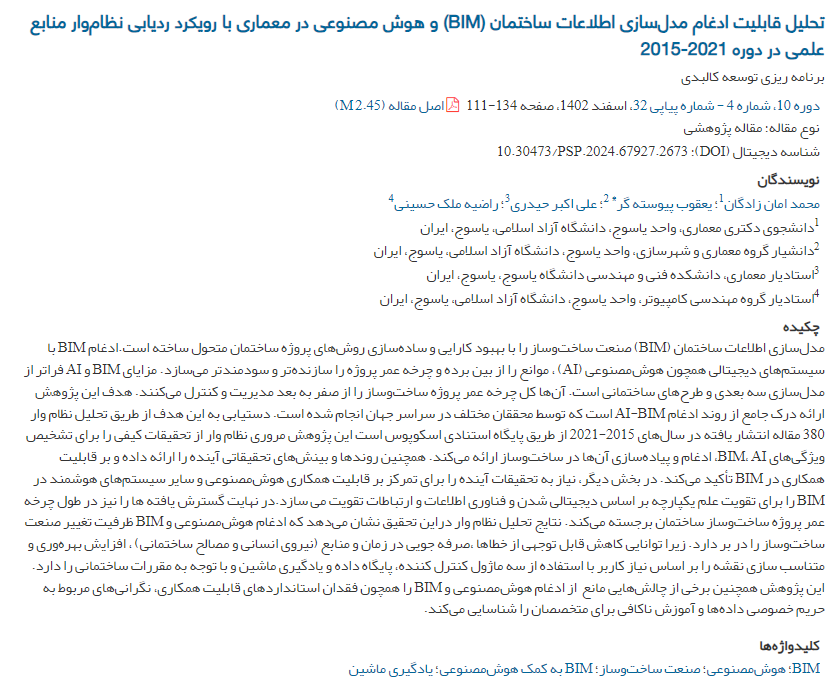
تحلیل قابلیت ادغام مدلسازی اطلاعات ساختمان (BIM) و هوش مصنوعی در معماری با رویکرد ردیابی نظاموار منابع علمی در دوره 2021-2015 |
|
| برنامه ریزی توسعه کالبدی | |
| دوره 10، شماره 4 – شماره پیاپی 32، اسفند 1402، صفحه 111-134 اصل مقاله (2.45 M) | |
| نوع مقاله: مقاله پژوهشی | |
| شناسه دیجیتال (DOI): 10.30473/PSP.2024.67927.2673 | |
| نویسندگان | |
| محمد امان زادگان1؛ یعقوب پیوسته گر* 2؛ علی اکبر حیدری3؛ راضیه ملک حسینی4 | |
| 1دانشجوی دکتری معماری، واحد یاسوج، دانشگاه آزاد اسلامی، یاسوج، ایران | |
| 2دانشیار گروه معماری و شهرسازی، واحد یاسوج، دانشگاه آزاد اسلامی، یاسوج، ایران | |
| 3استادیار معماری، دانشکده فنی و مهندسی دانشگاه یاسوج، یاسوج، ایران | |
| 4استادیار گروه مهندسی کامپیوتر، واحد یاسوج، دانشگاه آزاد اسلامی، یاسوج، ایران | |
| چکیده | |
| مدلسازی اطلاعات ساختمان (BIM) صنعت ساختوساز را با بهبود کارایی و سادهسازی روشهای پروژه ساختمان متحول ساخته است.ادغام BIM با سیستمهای دیجیتالی همچون هوشمصنوعی (AI) ، موانع را از بین برده و چرخه عمر پروژه را سازندهتر و سودمندتر میسازد. مزایای BIM و AI فراتر از مدلسازی سه بعدی و طرحهای ساختمانی است. آنها کل چرخه عمر پروژه ساختوساز را از صفر به بعد مدیریت و کنترل میکنند. هدف این پژوهش ارائه درک جامع از روند ادغام AI-BIM است که توسط محققان مختلف در سراسر جهان انجام شده است. دستیابی به این هدف از طریق تحلیل نظام وار 380 مقاله انتشار یافته در سالهای 2015-2021 از طریق پایگاه استنادی اسکوپوس است این پژوهش مروری نظام وار از تحقیقات کیفی را برای تشخیص ویژگیهای BIM، AI، ادغام و پیادهسازی آنها در ساختوساز ارائه میکند. همچنین روندها و بینشهای تحقیقاتی آینده را ارائه داده و بر قابلیت همکاری در BIM تأکید میکند. در بخش دیگر، نیاز به تحقیقات آینده را برای تمرکز بر قابلیت همکاری هوشمصنوعی و سایر سیستمهای هوشمند در BIM را برای تقویت علم یکپارچه بر اساس دیجیتالی شدن و فناوری اطلاعات و ارتباطات تقویت می سازد.در نهایت گسترش یافته ها را نیز در طول چرخه عمر پروژه ساختوساز ساختمان برجسته میکند. نتایج تحلیل نظام وار دراین تحقیق نشان میدهد که ادغام هوشمصنوعی و BIM ظرفیت تغییر صنعت ساختوساز را در بر دارد. زیرا توانایی کاهش قابل توجهی از خطاها ،صرفه جویی در زمان و منابع (نیروی انسانی و مصالح ساختمانی) ، افزایش بهرهوری و متناسب سازی نقشه را بر اساس نیاز کاربر با استفاده از سه ماژول کنترل کننده، پایگاه داده و یادگیری ماشین و با توجه به مقررات ساختمانی را دارد. این پژوهش همچنین برخی از چالشهایی مانع از ادغام هوشمصنوعی و BIM را همچون فقدان استانداردهای قابلیت همکاری، نگرانیهای مربوط به حریم خصوصی دادهها و آموزش ناکافی برای متخصصان را شناسایی میکند. | |
| کلیدواژهها | |
| BIM؛ هوشمصنوعی؛ صنعت ساختوساز؛ BIM به کمک هوشمصنوعی؛ یادگیری ماشین | |
| عنوان مقاله [English] | |
| Analysis of the Ability to Integrate Building Information Modeling (BIM) and Artificial Intelligence in Architecture with the Approach of Systematic Tracking of Scientific Resources in the Period of 2015-2021 | |
| نویسندگان [English] | |
| Mohammad Amanzadegan1؛ Yaghowb Peyvastehgar2؛ Ali Akbar Heidari3؛ Razieh Malekhosseini4 | |
| 1PhD Student in Architecture, Yasuj Branch, Islamic Azad University, Yasuj, Iran | |
| 2Associate Professor of Architecture and Urban Planning, Yasuj Branch, Islamic Azad University, Yasuj, IRAN | |
| 3Assistant Professor of Architecture, Faculty of Technical and Engineering, Yasouj University, Yasouj, IRAN | |
| 4Assistant Professor of Computer, Department of Computer Engineering, Yasuj Branch, Islamic Azad University, Yasuj, Iran | |
| چکیده [English] | |
| Building Information Modeling (BIM) has revolutionized the construction industry by improving efficiency and simplifying building project methods. Integrating BIM with digital systems such as artificial intelligence (AI) removes barriers and makes the project life cycle more productive and beneficial. The benefits of BIM and AI go beyond 3D modeling and building plans. They manage and control the entire construction project life cycle from start to the end. The aim of the current research is to provide a comprehensive understanding of the process of AI-BIM integration, which has been carried out by various researchers around the world. To achieve this goal, 380 articles published in 2015-2021 have been systematically analyzed through Scopus reference database. This research presents a systematic review of qualitative research to identify the characteristics of BIM, AI, their integration and implementation in construction. It also provides future research trends and insights and emphasizes interoperability in BIM. On the other hand, it reinforces the need for future research to focus on the interoperability of artificial intelligence and other intelligent systems in BIM to foster integrated science based on digitalization and information and communication technology. Finally, it also highlights the extension of the findings during the life cycle of the building construction project. The research results show that the integration of artificial intelligence and BIM has the capacity to change the construction industry. Because it has the ability to significantly reduce errors, to save time and resources (human resources and construction materials), to increase productivity and to adapt the map based on the user’s needs through controller modules, database and machine learning according to building regulations. This research also identifies some of the challenges hindering the integration of AI and BIM, such as the lack of interoperability standards, data privacy concerns, and insufficient training for professionals. | |
| کلیدواژهها [English] | |
| BIM, Artificial Intelligence, Construction Industry, AI-assisted BIM, Machine Learning |





0 دیدگاه